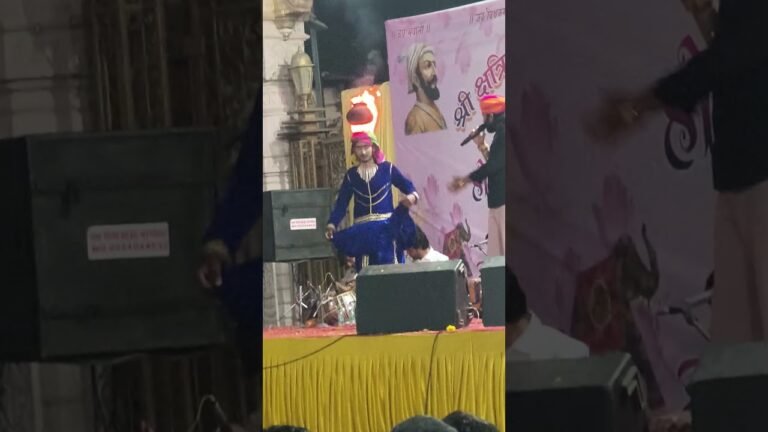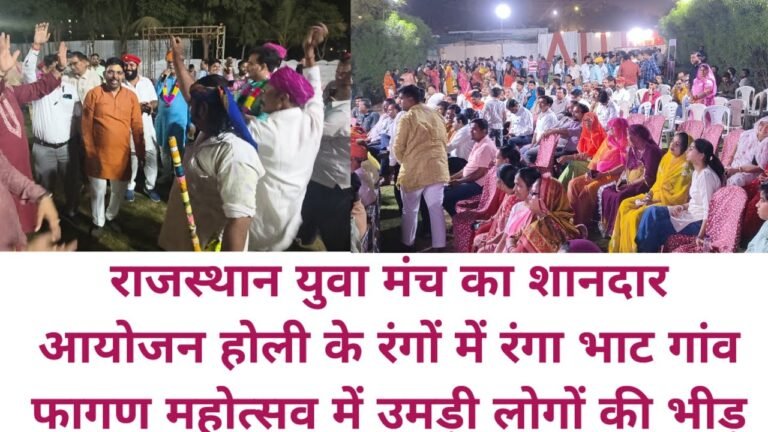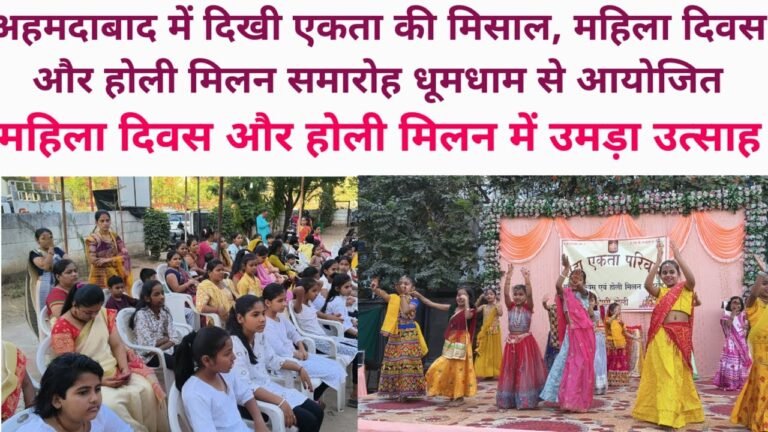
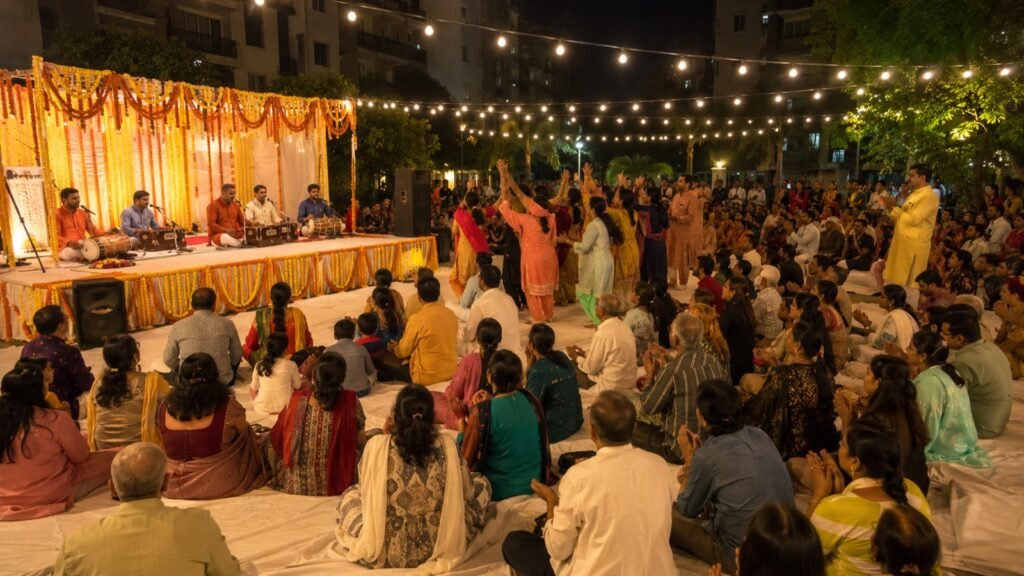
The Bhajan Sandhya is the most vibrant collective event in the migrant Rajasthani samaj of Ahmedabad. Whether it is a society’s common plot, a temple courtyard or a family’s own front yard — as evening falls, people begin to gather to the sound of the harmonium, dholak and manjira. This is not merely a music programme; it is the whole neighbourhood’s get-together, held once every month or two.
What is a Bhajan Sandhya
Bhajan Sandhya literally means “an evening of bhajans” — an evening gathering at which devotional songs are sung and heard collectively. Its defining quality is that the distance between stage and audience all but disappears. The singers sing from the stage, but the audience does not merely listen — they sing along, clap and dance.
Compared with a katha or a scriptural path, a Bhajan Sandhya is far more open and participatory in form. There is no rigid discipline about seating, children wander about, and those who arrive late slip in easily.
Types of Bhajan Sandhya
Shyam Sankirtan
Sankirtans dedicated to Khatu Shyam Ji are the most popular in Ahmedabad. Their tempo and energy run higher than an ordinary Bhajan Sandhya — the audience stands and dances, and the programme usually carries on until midnight or beyond. The events at Nava Naroda, Naroda, Sanghani Upvan Bunglows and Sangani Upvan all fall into this category.
Mata ki Chowki and Jagran
Events dedicated to the Devi, including kuldevi programmes such as Jeen Mata Mandir, Shahibaug and Gajan Mata Ji. A jagran runs all night and concludes with the morning aarti.
Purnima Bhajan Sandhya
Some samajs hold a regular Bhajan Sandhya every month on Purnima. The Rajpurohit Samaj’s Purnima Bhajan Sandhya and “Ek Shaam Shri Khetesvar Data ke Naam” are examples. Because the date is fixed each month, it becomes the samaj’s standing reunion.
“Ek Shaam … ke Naam”
This title has become a distinctive marker of Ahmedabad’s programmes — the evening is dedicated to a single deity, saint or cause. “Ek Shaam Balaji ke Naam”, “Ek Shaam Shurapura ke Naam” and “Ek Shaam Shri Gomata ke Naam” are examples.
Prabhat Pheri
A bhajan mandali that sets out at dawn rather than in the evening, singing its way through the lanes of the neighbourhood and ending with aarti at the temple — such as Isanpur’s daily Prabhat Pheri.
The instruments and their role
The entire character of a Bhajan Sandhya rests on its instruments:
- Harmonium — the principal melodic instrument, played by the singer himself as he sings.
- Dholak and tabla — the foundation of the rhythm; the tempo of the bhajan is set by these.
- Manjira and khartal — simple instruments that draw the audience into the rhythm, and anyone can play them.
- Daf and chang — the signature instruments of Phalgun and Shyam programmes, whose sound carries far and over which collective dancing comes naturally. The Khatu Shyam Mahotsav at Nana Chiloda is an example.
What marks these instruments out is that most of them need no formal training to play — and that is exactly what makes the Bhajan Sandhya so inclusive.
The Bhajan Sandhya tradition in Ahmedabad
The tradition has flourished in Ahmedabad chiefly for three reasons.
First — a migrant samaj needed a way to stay connected to its language and its music. Rajasthani bhajans, folk songs sung in Marwari and familiar tunes tie families directly back to their roots.
Second — society culture. The common plots and club houses of large residential projects became the natural venues for these programmes, where hundreds of people can gather with ease.
Third — the habit of turning private occasions into collective ones. The programme held for a wedding anniversary in New Ranip, for which saints came from Vrindavan, is one example. Birthdays, anniversaries and housewarmings — all of them become, under the pretext of a Bhajan Sandhya, a festival for the entire neighbourhood.
For the bigger programmes, well-known singers are invited from Rajasthan. At the event held by the Punrasar Bhakt Mandal in Kankaria, singers who had come from Napasar and Bikaner performed — proof of the cultural traffic that still runs between the migrant samaj and the home region.
How to organise a Bhajan Sandhya
- Singer/mandali — the dates of popular singers are booked months in advance. Get in touch at least a month ahead.
- Venue — a society common plot, a temple courtyard or a party plot. An open space is better, but during the monsoon a mandap is essential.
- Stage and decor — the darbar, the jhanki, flowers and lighting. Ahmedabad has several decoration mandals skilled at this work.
- Sound — a sound system of adequate capacity, though the night-time noise limit rules must be observed.
- Timing — 7 pm to 11 pm is usual; Shyam Sankirtans run much later.
- Prasad — arranging prasad or mahaprasad at the close is considered obligatory.
- Permissions — large public programmes require permission from the local administration and the police.
Frequently asked questions (FAQ)
What is the difference between a Bhajan Sandhya and a jagran? — A Bhajan Sandhya usually runs from evening into the night, whereas a jagran continues all night and ends with the morning aarti.
What is the difference between a Bhajan Sandhya and kirtan? — In kirtan a single name or mantra is sung collectively over and over, whereas in a Bhajan Sandhya a range of different bhajans is presented in sequence.
Why is Shyam Sankirtan so popular? — Devotion to Khatu Shyam Ji has spread out of Rajasthan and reached Ahmedabad, Surat, Mumbai and Delhi. The fast tempo of these sankirtans and the collective dancing appeal to young people in particular.
Is a Bhajan Sandhya only for one particular samaj? — No. Most programmes are open to all and free of charge; anyone from the neighbourhood may join in.
Who bears the cost of the programme? — It is borne by the host family, by contributions from the mandal’s members, or by a collective subscription raised in the neighbourhood.
Can women organise a Bhajan Sandhya? — Yes, and in Ahmedabad the number of Bhajan Sandhyas organised and run by women’s mandals is steadily rising.
Conclusion
For the migrant Rajasthani samaj of Ahmedabad, the Bhajan Sandhya is the thread that holds devotion, music and social connection together in one place. In a flat culture where people know their neighbours less and less, these programmes turn an entire complex into a single family for one evening. That is the real strength of this tradition — and that is why it keeps reaching the next generation.